What Are the Differences Between the Six Major Scotch Whisky Regions?
※当サイトには広告・アフィリエイトリンクが含まれています。
Scottish whisky is made all over Scotland, but do you know its six regions?
We toured about 50 distilleries across the different regions in total, and it was really interesting to learn the features of each of the six regions and the whisky each aims for.
Here we introduce those six regions and their features.
Reference article: 50 whisky Distillery Tours list in Scotland we visit
▲ How many do you know? We toured 50 whisky distilleries.
スポンサーリンク
目次
The Six Region Map of Scotch Whisky
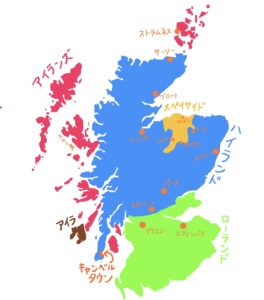
– Highland (blue)
– Lowland (yellow-green)
– Speyside (yellow)
– Islay (brown)
– Islands (red)
– Campbeltown (orange)
There are six whisky regions.
For clarity, I’ve also written the main cities, and the big cities of Glasgow and Edinburgh are in the Lowland region.
Of course, each distillery has its own different flavor, but here I introduce the rough features of each region.
Features of Highland Region Whisky
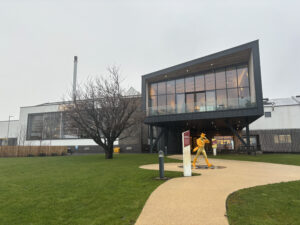
Glengoyne Distillery, about 30 minutes by bus north of Glasgow, is apparently right on the boundary between the Highlands and Lowlands.
The wide region north of there is the Highlands.
It’s large, so of course each place has different features, but it’s said to be characterized by fruity aromas and a complex, balanced flavor.
There’s also Aberfeldy Distillery, known for making the malt behind Dewar’s.
Representative distilleries: Clynelish Distillery / Tomatin Distillery, and more
スポンサーリンク
Features of Lowland Region Whisky
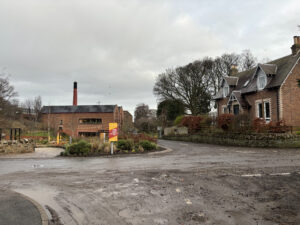
It’s said to be characterized by a fruity, light flavor.
What I personally felt, especially when I had the base whisky of Glenkinchie, one of Johnnie Walker’s malts, was a lemongrass-like freshness.
Auchentoshan uses the Irish-style method of triple distillation, so you can feel a smooth flavor.
Representative distilleries: Glenkinchie Distillery / Auchentoshan Distillery
Features of Speyside Region Whisky
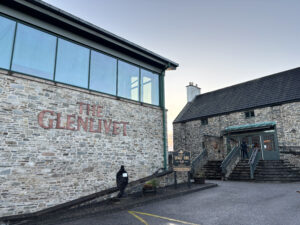
The Speyside region is where distilleries are especially concentrated, with many famous names.
There’s a lot of sweet, fruity, mellow whisky.
Our impression was that many distilleries clearly state they don’t use peat.
Some distilleries use peat for a portion of their whisky.
Representative distilleries: The Glenlivet Distillery / Glenfiddich Distillery, and more
スポンサーリンク
Features of Islay Region Whisky
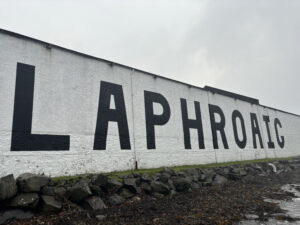
For whisky lovers, Islay is in a sense a sacred place.
We absolutely wanted to go, so we went there first.
Its defining feature is, above all, the smokiness from using peat.
Almost all distilleries use peat, so it’s a whisky I highly recommend for enjoying the differences in smokiness.
Representative distilleries: Laphroaig Distillery / Ardbeg Distillery / Bruichladdich Distillery
Features of Islands Region Whisky
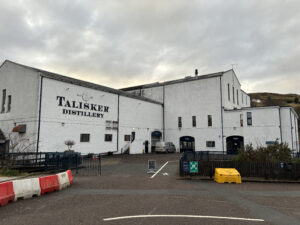
The Islands are the islands around Scotland.
Talisker is very famous, and being on islands, you can often enjoy a briny (salty) flavor and a smoky flavor from using peat.
Arran (Lochranza) Distillery is also in the Islands, but it doesn’t use peat now.
Lagg Distillery, on the same island, apparently makes whisky with different characteristics by using peat and so on.
Representative distilleries: Talisker Distillery / Highland Park Distillery / Scapa Distillery
スポンサーリンク
Features of Campbeltown Region Whisky
The town of Campbeltown once had many distilleries, but now there are only three.
It’s close to the Isle of Arran too, and there’s whisky similar to the Islands feel.
It’s said to be characterized by brininess and a complex, deep whisky.
Representative distilleries: Springbank Distillery / Glen Scotia Distillery
Summary
I’ve introduced the differences between the regions, but of course the whisky flavors differ within a region too.
If you spend more money you can drink richer, more full-bodied whisky, but you can also enjoy the differences in the not-so-expensive base whiskies.
The flavor also changes depending on the casks used, but I hope that knowing the rough differences becomes a starting point for thinking about which whisky to choose.
Related reading
50 whisky Distillery Tours list in Scotland we visit – By Region